
Preparing for Society 5.0
13585/2025
Abstract
Abstract
The project was created with the aim of preparing Albacete for Society 5.0, the next revolution after the Information Society, in which we are now immersed. According to its promoters, Society 5.0 aims to place people at the centre of technological development, integrating the physical and virtual worlds in a harmonious way. In short, this new society will be one that, ‘through a high degree of fusion between cyberspace and physical space, is capable of balancing economic progress with the resolution of social problems by providing goods and services that address multiple latent needs in a granular way, regardless of location, age, gender or language’.
The starting hypothesis is that ‘Digital Twins (DT) are one of the essential enabling technologies for achieving this Society 5.0, as they facilitate the controlled establishment of the connection between cyberspace and the physical world’. Therefore, the objective is to ‘propose a technological platform that facilitates the development of the systems of this new Society 5.0’. Along with this platform, the project will include a series of demonstrations of its use in the field of health and quality of life for citizens, putting forward proposals in areas such as the study of bullying, support for people with ADHD or other psychological or psychiatric problems, etc., areas in which the group has extensive experience derived from the projects it has carried out in recent years.
Starting Hypothesis
The hypothesis is that ‘Digital Twins (DT) are one of the essential enabling technologies for achieving this Society 5.0, as they facilitate the controlled establishment of the connection between cyberspace and the physical world’.
Specific Goals
Specific Goals
Propose a technological platform that facilitates the development of the systems of this new Society 5.0.
Include a series of demonstrations of its use in the field of health and quality of life for citizens.
Research Team
Engineers in Computer Science, Industrial Engineering and Telecommunications from Universidad de Castilla-La Mancha (UCLM):

Pascual González López
Professor, Principal Researcher

Elena Navarro Martínez
Professor
Antonio Fernández-Caballero
Professor
Francisco Montero Simarro
Professor
Rafael Morales Herrera
Professor

María Teresa López Bonal
Associate Professor

Víctor López Jaquero
Associate Professor

José Pascual Molina Massó
Associate Professor
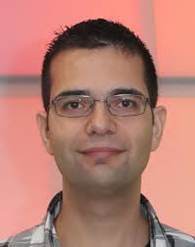
Arturo Simón García Jiménez
Associate Professor

José Luis de la Vara González
Associate Professor
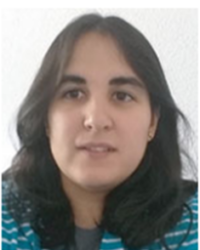
Lidia Belmonte Moreno
Associate Professor

Javier de las Morenas de la Flor
Associate Professor

Roberto Sánchez Reolid
Assistant Professor

Clara Ayora Esteras
Researcher

Daniel Sánchez Reolid
Predoctoral Researcher

María Elena Pretel Fernández
FPU-Predoctoral Researcher

Francisco López de la Rosa
Predoctoral Researcher

Aurora Macías Ojeda
Predoctoral Researcher
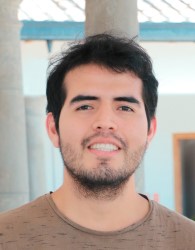
Luis Fernando Zhinin Vera
Predoctoral Researcher

José Luis Gímez Sirvent
Predoctoral Researcher

José Jesús González García
Predoctoral Researcher

Javier Jiménez Ruescas
Predoctoral Researcher

Juan López Ródenas
Predoctoral Researcher

Noelia González Sánchez
Predoctoral Researcher

Julia Ballati Martínez
Predoctoral Researcher

Francisco Javier Celdrán Martínez
Predoctoral Researcher
Participating Institutions

Ayuntamiento de Albacete
Results
Results
PhD Thesis
Masters Thesis
Journal Papers
2025
González-García, J. J., Pretel, E., López-Jaquero, V., Montero, F., & González, P. (2025). Smart-Pomodoro: Wearable Technology for Improving Time-Management, Engagement and Focus in Children with ADHD. International Journal of Human–Computer Interaction, 1-31
Conference Papers
2025
- Pretel, E., Sedlak, B., Casamayor-Pujol, V., Navarro, E., López-Jaquero, V., González, P., & Dustdar, S. (2025, November). Active Inference for Digital Twins: Predicting and Optimizing IoT Processing Service Performance. In Proceedings of the 15th International Conference on the Internet of Things(pp. 219-227).
- de la Vara, J. L., Mason, P., & Ayora, C. (2025). An Ontology Metamodel for Knowledge-Centric Systems Engineering in Practice. ER2025: Companion Proceedings of the 44th International Conference on Conceptual Modeling: Industrial Track, ER Forum, 8th SCME, Doctoral Consortium, Tutorials, Project Exhibitions, Posters and Demos, October 20-23, 2025, Poitiers, France. https://ceur-ws.org/Vol-4099/ER25_industrial_DeLaVara.pdf
- Celdrán, F.J., Sánchez-Reolid. R., Romero-Ayuso, D., Santos, O., González, P. (2026). Decoding ADHD in Ecologically Valid VR: An Exploratory Study of Multimodal Sensing with Temporal Deep Learning Decoding ADHD in Ecologically Valid VR. conference on Human Factors in Computing Systems (CHI 2026). Barcelona, Spain (enviado)
Books and Books Chapters

Grant 2022-GRIN-34436 funded by Universidad de Castilla-La Mancha and by «ERDF A way of making Europe».
From: 2022 until: 2025.